
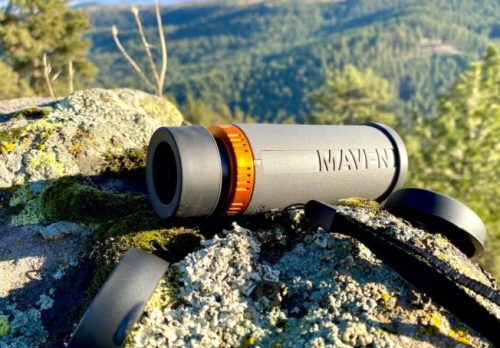
When outdoors, the trail always has something worth seeing. From wildlife moving through distant forests to breathtaking views waiting beyond the next ridge, the best monocular for backpacking helps you bring those distant sights closer without weighing down your pack.
Unlike bulky binoculars, a monocular offers a compact and lightweight viewing solution that you can easily carry on long hikes. In this buying guide, we highlight some of the best monoculars for backpacking and explain the key features to consider so you can choose a lightweight, reliable optic that fits your adventures.
Let’s get into it!
Best Monocular for Backpacking
1) Vortex Solo Monocular 10×36 – Best Overall
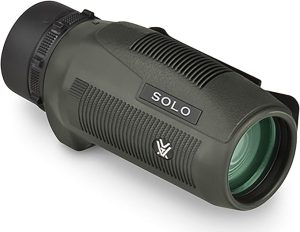
Engineered with the renowned Vortex’s craftsmanship, the Solo Monocular 10×36 is the best monocular for backpacking. It offers a compact and practical way to get a closer look at distant subjects without carrying a full-size binocular.
This monocular features 10x magnification that provides enough reach for outdoor activities such as hiking, bird watching, wildlife observation, sightseeing, and sporting events. The 36mm objective lens balances light gathering with portability, while the design keeps the overall package lightweight and easy to handle.
Vortex also gives the Solo a rugged construction that can handle regular outdoor use, and its textured exterior provides a secure grip when you use it on the move. The adjustable eyecup makes it easier to position the optic comfortably, including for users who wear glasses.
In use, the Vortex Solo 10×36 delivers a clear and useful view for its compact size, making it particularly appealing when portability matters more than the wider viewing experience of binoculars.
Pros
- Compact and lightweight design
- Balanced size and light gathering ability
- Durable construction
- Textured exterior
- Adjustable eyecup
- Easy to carry during hikes and travel
Cons
- Basic design lacks advanced features
2) Nocs Provisions Field Tube 10×32 Waterproof Monocular – Best for the Money

The Nocs Provisions Field Tube 10×32 is the best lightweight monocular for backpacking. It is designed modern, compact, waterproof, and adventure-ready with best-in-class optics to inspire the next generations to unplug and find deep connection, and interconnectedness to nature and our planet.
Its 10x magnification gives you enough reach to observe birds perched at a distance while the 32mm objective lens keeps the design lightweight and easy to carry. Additionally, the monocular uses a simple, user friendly design that makes it quick to bring into position whenever you spot something interesting.
Regarding handling, its compact size also makes it convenient for packing in a backpack, pocket, or outdoor gear bag without adding much bulk.
Furthermore, the waterproof construction makes the Nocs Provisions Field Tube 10×32 a dependable choice for outdoor use where changing weather or accidental splashes could become a concern. Its durable build also helps it handle the demands of hiking, sightseeing, wildlife observation, and travel.
Pros
- Compact and lightweight design
- Waterproof construction for outdoor use
- Easy to carry during travel and hiking
- Excellent low light performance
- Convenient one-handed hold capability
Cons
- Narrower viewing experience than binocular
3) Maven CM.1 8x32mm Monocular – Best for the Money
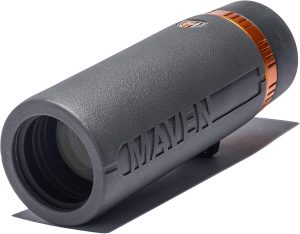
The Maven CM.1 8×32 monocular features premium glass and fully multi-coated lenses, providing crystal-clear, bright images for an enhanced viewing experience in all lighting conditions
Weighing a mere 8.7 ounces, the CM.1 8×32 monocular is incredibly compact and lightweight. This makes it a portable option for hiking, travel, birdwatching, and outdoor exploration.
With 8x magnification and a 32mm objective lens, it offers a balance of field of view and magnification, delivering detailed images without sacrificing stability during handheld use
Regarding construction, this monocular is designed to handle the toughest environments. It is fully waterproof and fog-proof, ensuring reliable performance in rainy, humid, or cold conditions without worrying about lens fogging or water damage.
Furthermore, the rubber-armored body ensures a secure, non-slip grip, making the monocular comfortable and easy to handle, even during extended use in rough or wet conditions
Above all, this monocular features extra-low dispersion glass that minimizes chromatic aberration and delivers superior color accuracy and sharpness across the entire field of view.
Pros
- Wide 393-foot field of view
- Compact and lightweight design
- Waterproof and fog proof construction
- Excellent color fidelity and contrast
- Comfortable multi position eyecup
Cons
- Short eye relief for eyeglass wearers
4) K&F Concept 8-32X50 Zoom Monocular – Best Budget

The K&F Concept 8-32X50 Zoom Monocular offers versatile magnification for users who want to observe subjects at different distances without carrying multiple optics.
Its 8x to 32x zoom range lets you start with a wider field of view for locating a subject and then increase the magnification to examine finer details. The 50mm objective lens helps collect more light, making the monocular useful during early morning, late afternoon, and other lower light conditions. The zoom functionality also makes it suitable for activities such as bird watching, wildlife observation, hiking, sightseeing, and outdoor exploration.
Another notable feature is the compact design. It keeps the setup more convenient than carrying a full size binocular, while the lightweight construction makes it easy to hold during lengthy glassing sessions.
This zoomable monocular is durable and shockproof for outstanding durability. It is also compatible with most smartphones including Android and iOS phones, ensuring a wide range of use.
Pros
- Wide 8x to 32x zoom range
- Useful for wildlife and bird watching
- High magnification for distant subjects
- Compact monocular design
- Versatile for outdoor activities
Cons
- Higher zoom levels provide a narrower field of view
5) Celestron Nature 10×25 Monocular – Best for Eyeglass-Wearers

The Celestron Nature 10×25 Monocular combines portability with dependable optical performance, making it a practical companion for hiking, birding, travel, and everyday outdoor observation.
Its most notable feature is the twist-up eyecup. It provides a comfortable viewing for both eyeglass and non-eyeglass wearers.
Furthermore, the 10x magnification brings distant birds, wildlife, and scenery closer while the bright 25mm objective lens gathers enough light to produce vibrant, high-contrast views. Celestron also uses multi-coated optics and BaK-4 prism glass to improve resolution, contrast, and overall image clarity, helping you see subjects with crisp details and natural-looking colors.
The 5.8° angular field of view also gives this monocular an advantage when you need to scan open landscapes or follow birds and other moving subjects. Rather than forcing you to focus on a narrow area, the wide view lets you take in more of the scene and track movement more easily.
Beyond its optical performance, the Celestron Nature 10×25 Monocular offers a rugged and weather-ready design that suits active outdoor use. Its rubber-armored polycarbonate housing helps protect the monocular from bumps and accidental drops. This monocular also features a waterproof and nitrogen-purged construction to help prevent internal fogging when you use it in rain, snow, or humid conditions.
Pros
- Lightweight and highly portable
- Sharp 10x magnification
- Crisp, true-color images
- Waterproof and nitrogen-purged construction
- Rugged rubber-armored housing
- Wide 5.8° field of view
- Twist-up eyecup supports comfortable viewing
Cons
- The 25mm objective lens gathers less light than larger optic
6) Usogood Monocular Telescope – Best Image Clarity
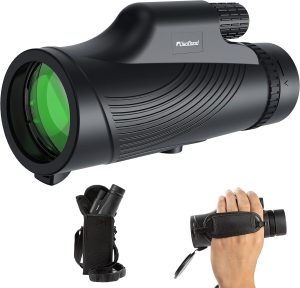
The Usogood Monocular Telescope 10×42 offers a practical combination of magnification, image clarity, and portability for outdoor observation.
Its 10x magnification and 42mm objective lens provide a broad 360 ft field of view at 1,000 yards, helping you follow birds, wildlife, sporting events, and distant scenery with ease.
Optically, the BAK4 prism and FMC lenses improve light transmission and reduce chromatic aberration, producing bright and sharp images in daylight and reasonably clear views in low light. Furthermore, the large 22.5mm eyepiece also creates a comfortable viewing experience and works well for glasses wearers.
With its ability to focus on subjects as close as 3.3 yards and observe distant targets, this monocular gives you plenty of versatility for garden birding as well as longer-range outdoor viewing.
Furthermore, the compact 6.1 x 2.8 x 2.1 inch design makes the Usogood 10×42 easy to carry during hikes, bird watching trips, sports events, and other outdoor activities. This monocular also features a rubber-armored body that provides a secure one-handed grip, while the included hand strap, lens caps, soft carrying pouch, and neck lanyard give you several convenient carrying options.
Pros
- Detailed views
- Wide 360 ft field of view at 1,000 yards
- Large eyepiece works well with glasses
- Compact and lightweight design
- Tripod and smartphone adapter compatible
- Waterproof, fog-proof, dust-proof, and shock-resistant
- Includes useful carrying accessories
- Backed by a two-year warranty
Cons
- The 10x magnification requires steady hands
7) OXK 12×56 High Power Monocular – Best for Beginners
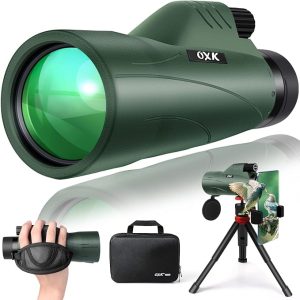
Coming in seventh is the OXK 12×56 High Power Monocular. It combines strong magnification with a wide field of view to deliver a comfortable viewing experience across a variety of outdoor activities.
The high 12x magnification helps bring distant subjects closer, while the 6.5° field of view lets you take in more of the surrounding scene without constantly repositioning the monocular.
Moreover, the large 56mm objective lens gathers plenty of light, helping produce brighter images in changing outdoor conditions. The 25mm eyepiece provides a larger viewing area that feels comfortable during extended observation, while the large BAK-4 prism and fully multi-coated lenses further improve light transmission, contrast, and color accuracy.
The OXK 12×56 also stands out for its useful accessories. The included smartphone holder allows you to connect your phone to the monocular and capture distant views, while the sturdy tripod provides added stability for longer viewing sessions and smartphone photography. You can adjust the tripod to different angles and three length settings, giving you more flexibility when setting up your viewing position.
Pros
- Detailed long-distance views
- Wide 6.5° field of view
- Comfortable viewing
- Clear, high-contrast images
Cons
- The large design makes it less portable
8) OLIMT 10×25 Monocular Telescope – Best with Smartphone Connectivity
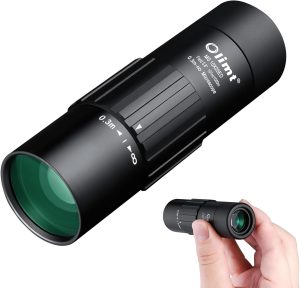
Lastly, the OLIMT 10×25 Monocular Telescope offers a compact and convenient way to bring distant subjects closer during outdoor adventures.
Its high magnification and wide viewing angle help you observe wildlife, birds, landscapes, sporting events, concerts, and other distant scenes with greater detail. The large eyepiece and objective lens allow more light to enter the optical system, helping produce a brighter and more comfortable image than smaller monoculars.
Its BAK-4 prism and fully multi-coated lenses further improve light transmission while reducing unwanted reflections, resulting in clearer images with good contrast and color accuracy.
Another feature that makes it the best monocular for backpacking is its smartphone compatibility. This feature makes it easier to capture and share what you see. The included smartphone holder works with a wide range of phones, while the sturdy tripod provides additional stability for photography and extended viewing sessions.
Pros
- Large light gathering lenses
- BAK-4 prism for clear images
- Fully multi-coated optics
- Smartphone holder included
- Adjustable tripod included
- Comfortable for extended viewing
Cons
- Small field of view
Key Factors to Consider when Choosing the Best Monocular for Backpacking
Magnification
To begin with, choose a monocular with enough magnification to view distant landscapes, wildlife, and trail markers without making the image difficult to stabilize. For most backpacking trips, 8x to 10x magnification provides a practical balance between reach and ease of use.
Objective Lens Size
The objective lens determines how much light enters the monocular. A larger lens produces a brighter image, especially in low light, but it also adds weight and bulk. For the best monocular for backpacking, look for a compact model with a 25mm to 42mm objective lens to balance brightness and portability.
Weight and Size
Every ounce matters when you carry your gear over long distances. Choose a lightweight, compact monocular that fits easily into a backpack pocket or can hang comfortably around your neck. A smaller design also makes it easier to access your optic quickly when you spot something interesting.
Optical Clarity
Next, clear optics help you identify distant objects and enjoy detailed views of mountains, wildlife, and scenery. Look for fully multi-coated lenses and quality glass that deliver sharp images with good contrast. The best monocular for backpacking should maintain clarity across most of the viewing area without excessive distortion.
Durability and Weather Resistance
Backpacking can expose your gear to rain, dust, bumps, and changing temperatures. Choose a rugged monocular with a strong housing and reliable water and fog resistance. A rubber-armored exterior is also important in improving grip while protecting the optic from everyday impacts.
Field of View and Close Focus
A wider field of view makes it easier to scan landscapes and follow moving wildlife. At the same time, a short close-focus distance lets you examine nearby plants, insects, trail details, and other objects. Consider both features based on the type of scenery and wildlife you expect to encounter.
Ease of Use
Lastly, the best monocular for backpacking should remain comfortable and simple to operate when you are on the move. Look for an ergonomic design, smooth focus adjustment, a comfortable eyecup, and easy-to-reach controls. If you wear glasses, choose a model with an adjustable or twist-up eyecup for comfortable viewing.
Related:
Best Monocular for Backpacking FAQs
- What magnification is best for backpacking?
An 8x or 10x monocular works well for most backpacking activities. These magnifications provide enough reach for viewing distant wildlife and scenery while remaining relatively easy to hold steady.
- How much should a backpacking monocular weigh?
There is no single ideal weight, but a lightweight model makes more sense for long-distance hiking. Consider the total weight alongside optical performance, durability, and size rather than choosing the lightest model available.
- What makes a monocular good for hiking?
A good hiking monocular should offer clear optics, practical magnification, compact construction, low weight, weather resistance, and comfortable handling. These features allow you to enjoy distant views without adding unnecessary bulk to your gear.
Final Thoughts
In conclusion, the best monocular for backpacking combines useful magnification, clear optics, compact dimensions, low weight, and dependable durability. Prioritize the features that match your hiking environment and viewing needs rather than choosing a monocular based on magnification alone. A well-balanced model will give you excellent views without adding unnecessary weight to your pack.