
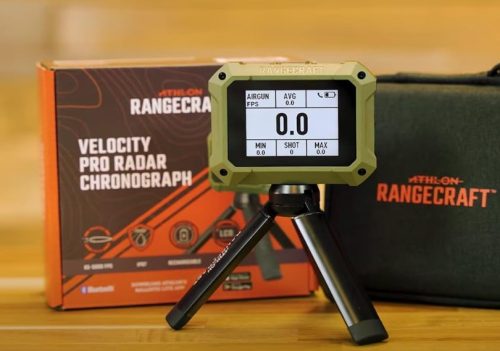
Are you looking for the best archery chronographs to measure arrow velocity accurately, assess equipment changes, and identify inconsistencies that affect your results? If so, you are in the right place.
Whether you are tuning a compound bow, testing a crossbow, or preparing your setup for hunting season, a dependable chronograph provides the data you need to evaluate performance with greater precision. In this guide, we explore the best archery chronographs to help you find a dependable option that meets your needs and budget.
What is an Archery Chronograph and How does it Work?
An archery chronograph is a device that measures the speed of an arrow as it leaves a bow, usually displaying the result in feet per second (FPS). It helps archers evaluate bow performance, compare different arrow weights, and monitor changes after adjusting their equipment.
An archery chronograph works by detecting an arrow’s movement and calculating its velocity over a measured distance or through radar tracking. Optical chronographs use light sensors to record when an arrow passes through a designated area, while radar models use Doppler technology to track the arrow’s movement. By providing actual speed readings instead of relying on advertised bow speeds, a chronograph helps users make informed decisions about their equipment and setup.
Best Archery Chronographs
1) Garmin Xero® C1 Pro, Compact Ballistics Chronograph
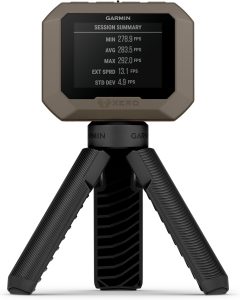
The Garmin Xero® C1 Pro Compact is the best archery chronograph. It offers a convenient way to measure projectile velocity and collect reliable shooting data without attaching equipment to your firearm.
This chronograph measures velocities from 100 to 5,000 feet per second, making it suitable for bullets, arrows, crossbow bolts, slugs, birdshot, paintballs, and airsoft BBs. Its straightforward setup allows you to turn on the device, position it toward the target, and shoot within approximately 15 inches of the unit.
Weighing just 5.7 ounces, this compact chronograph fits easily into a back pocket or range bag, making transportation simple. Furthermore, the 2.2-inch backlit touchscreen, supported by physical button controls, helps you view shot readings clearly outdoors, while the IPX7 water-resistance rating adds protection when changing weather conditions affect your shooting sessions.
The Xero C1 Pro also offers useful data-tracking features for shooters who want to evaluate consistency and improve their ammunition or projectile setups. Its Bluetooth connectivity pairs with the Garmin ShotView app, allowing you to record shot velocities, compare results, calculate extreme spreads, monitor deviations, and export data to CSV files for analysis in Excel. These features make it easier to identify velocity variations and maintain organized records across multiple shooting sessions.
Pros
- Wide 100–5,000 fps velocity range
- No firearm attachment required
- Lightweight 5.7 oz portable design
- Backlit touchscreen with button controls
- Bluetooth connectivity and ShotView app integration
- CSV export for detailed data analysis
- IPX7 water resistance
- Convenient USB-C recharging
Cons
- Six-hour maximum battery life
2) Caldwell Ballistic Precision Chronograph 2.0
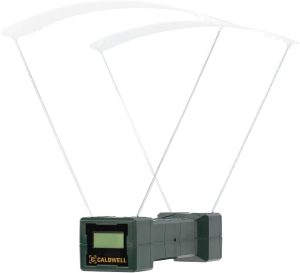
The Caldwell Ballistic Precision Chronograph 2.0 offers a convenient way to measure projectile velocity and monitor shooting performance.
It combines straightforward controls with a large LCD screen, making it easy to view shot readings during range sessions. Factory-calibrated to an accuracy of ±0.1%, this chronograph provides reliable velocity measurements for shooters who want consistent data for evaluating ammunition and tracking performance.
To add to its appeal, the Bluetooth connectivity adds another layer of convenience by allowing users to pair the device with the free Caldwell mobile app, available for Apple and Android devices. This integration helps streamline data collection and makes it easier to organize, review, and export shooting results without relying on handwritten notes.
Moreover, the Caldwell Ballistic Precision Chronograph 2.0 also offers practical features that support convenient use in different shooting environments. Its oversized sun shades help improve measurement reliability in bright sunlight, while the included nylon carry bag makes transportation and storage easier. Through the Caldwell app, users can record muzzle velocity, average velocity, minimum and maximum velocity, kinetic energy, power factor, shot strings, and other performance metrics.
Pros
- Easy to access controls
- Detailed data tracking
- Portable design
- ±0.1% factory-calibrated accuracy
- Large, easy-to-read LCD screen
- Bluetooth connectivity and free mobile app
- Records multiple shooting performance metrics
Cons
- Full app functionality requires a compatible smartphone
3) HNZMDY Ballistic Precision Chronograph
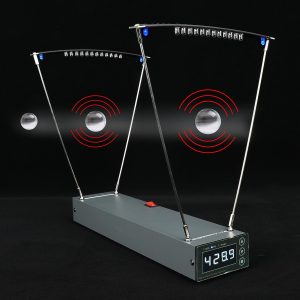
As one of the best archery chronographs, the HNZMDY Ballistic Precision Chronograph offers a practical way to measure projectile velocity and evaluate performance across different shooting and sporting applications.
It measures speeds ranging from 4 to 6,500 feet per second (FPS), making it suitable for testing rifles, pistols, shotguns, and arrows. You can also use it for various projectile-speed experiments, including badminton, table tennis, and free-fall demonstrations.
Furthermore, the chronograph features an aluminum alloy and stainless steel construction that supports durability during regular use. With a stated measurement error of 1% or less, it provides useful velocity readings for performance testing and load development when used correctly.
The HNZMDY Ballistic Precision Chronograph also combines straightforward operation with a large LCD screen that displays readings in feet per second (FPS) or meters per second (MPS). Its large induction area and high sensitivity help detect passing projectiles, while its adaptability to different lighting conditions supports indoor and outdoor use during the day or night.
Beyond velocity measurements, the unit measures energy from 0.1 to 6,000 joules, giving users additional information for evaluating projectile performance. It operates on four AA batteries, which you must purchase separately, and uses a support rod for setup.
Pros
- Wide velocity range of 4–6,500 FPS
- Measures projectile energy up to 6,000 J
- Stated measurement error of 1% or less
- Large, easy-to-read LCD screen
- Displays readings in FPS or MPS
- Aluminum alloy and stainless steel construction
- Suitable for indoor and outdoor testing
Cons
-
Requires four AA batteries, sold separately
4) Xuhal Ballistic Chronograph Precision Shooting Speed Tester
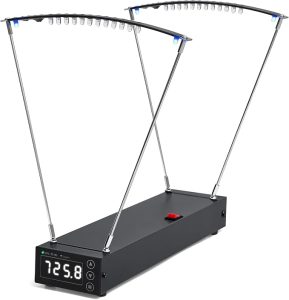
Next is the Xuhal Ballistic Chronograph Precision Shooting Speed Tester. This chronograph has large aisles, which measures the speed of slingshot, bow and arrow, table tennis, badminton and more.
It selling point is solid construction. It features an aluminum alloy and stainless steel construction that provides durability for regular use, while its support rods help maintain a stable setup during measurements.
With a measurement range of 1–2,000 meters per second (MPS), or 5–6,500 feet per second (FPS), this chronograph accommodates a broad range of speed-testing needs. Its stated measurement error of just 1% also makes it a useful option for users who want consistent velocity readings.
The Xuhal Ballistic Chronograph also emphasizes straightforward operation through its large LCD screen, which displays readings in either MPS or FPS. Three buttons and three indicator lights make it easier to operate the device and navigate its basic functions without dealing with an overly complicated interface. The included support rods also simplify installation and help position the chronograph for measurements. However, users should ensure they set up the device correctly and follow the manufacturer’s instructions.
Pros
- Durable aluminum alloy and stainless steel construction
- Wide 5–6,500 FPS measurement range
- Stated measurement error of 1%
- Large LCD with MPS and FPS readings
- Simple three-button operation
- Suitable for various speed-testing applications
Cons
-
Requires proper setup for reliable readings
5) SC2000 Ballistic Chronograph
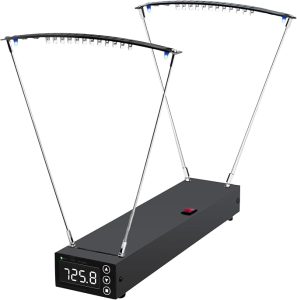
Coming in fifth is the SC2000 Ballistic Chronograph. This chronograph offers a practical solution for measuring the speed of bullets, arrows, and other moving objects with reliable accuracy.
Its aluminum and stainless-steel construction provides a sturdy build, while its sensitive detection system helps capture movement and deliver consistent readings. Furthermore, the chronograph features a large sensing area that makes it easier to detect passing objects, making it useful for shooting enthusiasts, archers, and anyone conducting speed-related experiments.
Ease of use is another advantage of the SC2000 Ballistic Chronograph. Its large LCD screen displays measurements in meters per second (MPS), feet per second (FPS), or joules, allowing you to view speed and energy readings in convenient units. Beyond measuring bullets and arrows, you can use this chronograph to test the speed of ping-pong balls, badminton shuttlecocks, and other moving objects. Its versatility also makes it suitable for educational activities and science experiments involving motion, velocity, and falling objects.
Pros
- Durable aluminum and stainless-steel construction
- Sensitive motion detection system
- Large sensing area
- Versatile use
- Easy-to-read LCD screen
- Displays MPS, FPS, and joules
Cons
-
Requires careful setup for different objects
6) Kqimris Ballistic Precision Chronograph
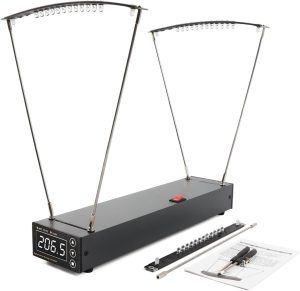
The Kqimris Ballistic Precision Chronograph is one of the best archery chronographs for shooting practice, equipment testing, and other speed-measurement experiments.
It features an aluminum alloy and stainless steel construction, supported by industrial-grade core components that promote stability and consistent performance. Its large sensing area improves detection sensitivity and makes it easier to position projectiles for measurement.
Regarding versatility, this chronograph measures the velocity of rifles, pistols, shotguns, and arrows, making it an indispensable tool for shooters, archers, and outdoor enthusiasts who want to monitor projectile performance. It also supports experiments involving table tennis balls, badminton projectiles, and other moving objects, extending its usefulness beyond conventional shooting applications.
Beyond that, the Kqimris Ballistic Precision Chronograph features a large LCD screen that displays measurements in meters per second (MPS), feet per second (FPS), and joules, helping users review velocity readings and related energy measurements. Its memory stores up to 36 sets of data, while the average-reading function helps users compare results across multiple tests.
Above all, the chronograph also adapts to different ambient lighting conditions, although it performs better in darker environments.
Pros
- Durable aluminum alloy and stainless steel construction
- Large, sensitive detection area
- Easy-to-read LCD display
- Measures in MPS, FPS, and joules
- Stores up to 36 sets of data
Cons
-
Works best in darker ambient conditions
7) QKVCX High-Precision Shooting Speed Meter
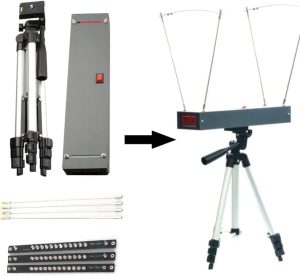
Ideal for hunters, shooting sports enthusiasts, and gun hobbyists, the QKVCX High-Precision Shooting Speed Meter, Ballistic Slingshot Chronograph offers a practical way to measure projectile velocity and evaluate performance across different shooting and recreational activities.
It measures the speed of projectiles such as pellets, arrows, bullets, and slingshot ammunition, making it useful for archery practice, shooting experiments, and velocity testing. The manufacturer specifies an accuracy of ±1% or better, which helps users collect consistent readings when evaluating projectile speed.
Furthermore, the device measures energy, records test results, and displays average readings. This allows users to review their measurements and compare performance across multiple tests.
Construction-wise, its aluminum alloy and stainless steel construction provides a sturdy foundation for regular use, while the straightforward startup process and FPS display help users begin measuring velocity without an unnecessarily complicated setup.
Portability adds to the QKVCX chronograph’s versatility, allowing users to carry it between practice locations or use it in a dedicated testing area. You can mount the device on a tripod or position it on a stable tabletop or workbench, depending on your available space and testing requirements.
Pros
- ±1% stated velocity accuracy
- Measures projectile speed and energy
- Records results and displays average readings
- Aluminum alloy and stainless steel construction
- Portable design
- Supports tripod and tabletop placement
- Suitable for shooting tests and educational experiments
Cons
-
Setup and alignment take time
Criteria for Choosing the Best Archery Chronographs
Measurement Accuracy and Consistency
For starters, choose an archery chronograph that delivers accurate and consistent arrow-speed readings. Check the manufacturer’s accuracy specifications and measurement tolerances before buying. Models that record individual shots and calculate average speeds make it easier to compare results. Maintain consistent shooting conditions and follow the setup instructions for reliable measurements.
Detection Technology
The best archery chronographs typically use optical sensors or radar technology to measure arrow speed. Optical models often cost less but require proper alignment and suitable lighting. Radar models can offer easier positioning without requiring arrows to pass between sensors. Compare the setup requirements, operating conditions, and price of each type. Choose the technology that best suits your shooting environment and budget.
Speed Measurement Range
Next, check the chronographs’ minimum and maximum speed limits to ensure it can measure your arrows or crossbow bolts. Arrow velocity varies with bow type, draw weight, arrow weight, and other setup factors. Choose a model that comfortably covers your expected speed range. If you use different bows, confirm that the chronograph supports each setup. Remember to always follow the manufacturer’s instructions for safe and accurate testing.
Ease of Setup and Use
Furthermore, choose a chronograph with simple controls, clear instructions, and an easy-to-read display. Optical models may require careful alignment, while radar units often need specific positioning and distances. Features such as automatic shot detection and quick access to readings can simplify testing. A straightforward setup saves time when comparing arrows or adjusting your bow. Prioritize convenience if you plan to use the device frequently.
Display and Data Features
The best archery chronographs should have a clear display that helps you read arrow-speed measurements quickly and accurately. Look for models that show velocity in feet per second (FPS) and, if needed, meters per second (m/s). Advanced options record individual shots, calculate averages, and track minimum and maximum speeds. Some models also connect to smartphones or computers for data storage. Choose features that match your testing needs without paying extra for unnecessary functions.
Build Quality and Portability
Also important is build quality and portability. Durable construction helps your chronograph withstand regular use and transport. Check the housing, mounting system, sensor protection, and resistance to dust and moisture.
Regarding portability, compact, lightweight models are easier to carry to shooting ranges or outdoor locations. A protective case also helps prevent damage during storage and transport. Confirm the manufacturer’s environmental guidelines before using the device in challenging weather conditions.
Power Supply and Overall Value
Lastly, consider battery life, charging options, and replacement battery availability before purchasing the best archery chronographs. Compare the price with useful features such as accuracy, portability, data storage, and included accessories. Rechargeable models may offer convenience, while replaceable batteries can simplify power management. Frequent users may benefit from advanced features, but occasional users can save money with a basic model. Prioritize reliable performance, suitable speed coverage, and useful features that fit your budget.
Next Read
- Best Quick Release Crossbow Slings
- Red Dot vs Green Dot Sights | Which Optic Is Best for You?
- Best Portable Dry Fire Training System
How to Use an Archery Chronograph
Follow these steps to obtain consistent readings from an archery chronograph:
- Read the manufacturer’s instructions and confirm archery compatibility
- Position the chronograph at the specified distance and orientation
- Align the bow, arrow path, and detection area as required
- Use properly matched arrows and maintain a consistent shooting setup
- Record multiple readings instead of relying on a single shot
- Review the results and investigate unusual variations
- Follow all range rules and keep the equipment outside the arrow’s flight path unless the device requires another manufacturer-approved arrangement
Best Archery Chronographs Care and Maintenance Tips
- Store the chronograph in a protective case when not in use
- Keep optical sensors and radar surfaces clean
- Inspect mounts, tripods, cables, and accessories regularly
- Protect the device from moisture, dust, and excessive heat according to its rating
- Maintain batteries or recharge the unit before shooting sessions
- Install firmware updates when applicable
- Follow the manufacturer’s instructions for storage, calibration, and troubleshooting
FAQs
- Are radar chronographs better than optical models?
It depends on your budget, shooting environment, and preferred setup. Radar chronographs often offer easier positioning, while optical models typically provide a more affordable way to measure arrow speed.
- How accurate are archery chronographs?
Accuracy varies by model, technology, and setup conditions. Follow the manufacturer’s instructions and measure several shots to obtain consistent readings and a more reliable average speed.
- What speed range should I look for?
Choose a chronograph that comfortably covers your expected arrow or bolt speeds. Consider your bow type, arrow weight, and potential equipment changes when comparing measurement ranges.
- Do archery chronographs work indoors?
Yes. Many models work indoors, but performance depends on their detection technology. Optical chronographs may require suitable lighting, while radar models need correct positioning for dependable readings.
Conclusion
Hopefully, you have found this buying guide insightful. A quality chronograph takes the guesswork out of measuring arrow speed and helps you make informed decisions about your bow setup.
Focus on dependable readings, a suitable measurement range, ease of use, and durable construction when comparing models. With the right chronograph, you will track performance, compare arrow configurations, and fine-tune your equipment using reliable speed data.