
Speed, precision, and consistency separate average practice from productive training. This is where the best shot timers for training & dry fire practice come in handy. These tools measure all three by recording how quickly you respond to a start signal, tracking split times, and setting performance goals, keeping every drill focused.
If you want to sharpen your reaction speed, improve shooting rhythm, or build consistency through dry-fire practice at home, we are here to help you find a timer that gives you clear feedback to measure your progress and identify weaknesses.
Let’s get started!
Best Shot Timers for Training and Dry Fire Practice – Top Picks
1) Shooters Global Timer 2
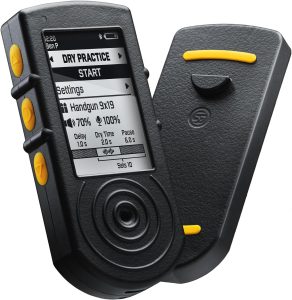
The Shooters Global Timer 2 is the best shot timer for training & dry fire practice.
With a smart sensor, it detects Dry fire sound, Co2, lr22 + suppressed, 9mm and any larger firearm caliber. The sensor also filters out echoes and allows to train with the timer even in a public enclosed range with other shooters, isolating and capturing only your shot sounds.
Furthermore, the loud buzzer and acoustic amplifier direct the sound right up in your ear, which is ideal for training with double ear protection or training large group outside.
Construction-wise, the time is rugged and water resistant. Its compact body and ergonomic design ensure one handed operation while maintaining high durability.
Beyond that, the timers Bluetooth connectivity and integration with the Drills companion apps expands your training options beyond basic shot timing. The app lets you control the timer remotely, record training videos with timer data overlaid in real time, review performance on a larger screen, and create or share shooting stages using 3D and augmented reality features.
Pros
- Detects dry fire, suppressed shots, and multiple calibers
- Filters echoes and background noise
- Extremely loud buzzer for use with hearing protection
- Rugged, water-resistant, ergonomic design
- Bluetooth connectivity and feature-rich companion app
Cons
-
For beginners, the advanced features take time to master
2. PACT Club Timer III
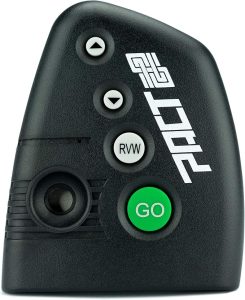
Suitable for both indoor and outdoor range environments, the PACT Club Timer III offers a practical solution for shooters who want to track their performance and improve their training sessions.
Its ergonomic design makes it comfortable to handle, while the extra-loud buzzer provides a clear start signal in busy shooting environments. Furthermore, the timer allows users to record shot strings, making it easier to monitor shooting pace, evaluate consistency, and identify areas that need improvement.
Whether you practice at an outdoor range or participate in regular shooting drills, the PACT Club Timer III helps you structure sessions and measure progress without unnecessary complications.
Another useful feature is its flexible start setting, which lets you choose between an instant start and a delayed start to suit different training drills. This flexibility supports reaction-time exercises and timed practice sessions, giving shooters more control over how they train.
Above all, the included belt clip also improves portability by allowing you to carry the timer conveniently between drills without constantly holding it.
Pros
- Ergonomic design for comfortable handling
- Ideal for indoor and outdoor range use
- Ease of use
- Records shot strings for performance tracking
- Instant and delayed start options
- Good value for money
Cons
-
Focuses on essential timing functions rather than advanced analytics
3. Solvoxa Shot Timer for Shooting Competition
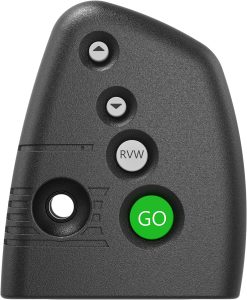
As one of the best shot timers for training & dry fire practice, the Solvoxa Shot Timer for Shooting Competition offers practical features for shooters who want to track their performance, improve consistency, and structure their training sessions.
Its ergonomic design features recessed buttons that help prevent accidental presses, while the ambidextrous layout allows both left- and right-handed users to operate the timer comfortably. You can hold it in your hand or attach it to your belt for convenient access during practice and competitions.
Beyond that, the 110dB buzzer delivers a loud start and end signal that helps you stay on schedule, even in noisy shooting environments. However, actual audibility may vary depending on range noise and hearing protection, so you should test the buzzer under your usual training conditions.
The Solvoxa Shot Timer also features a bright, easy-to-read LCD that displays split times, total time, and par time at a glance. On top of that, its auto-scrolling display helps you monitor performance without navigating complicated menus, making it useful for timed drills and competitive practice.
Pros
- Loud buzz signal
- Ambidextrous recessed buttons
- Bright display
- Quick access to previous shot strings and split times
- Easy on the wallet
- Compact and easy to transport
- Simple operation
Cons
- Poor backlight brightness in low‑light indoor ranges
4. Design-Pie Shot Timer
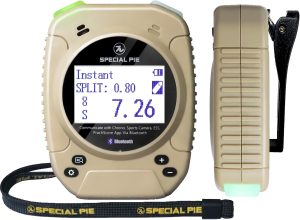
Ideal for IPSC, IDPA, and USPSA among others, the Design-Pie Shot Timer for Shooting offers a versatile solution for shooters who want to improve their timing, consistency, and training efficiency.
It selling point is customizable training modes, including a PAR timer with adjustable durations from 0.5 to 120 seconds and up to 10 repetitions. This allows you to structure drills without assistance. You can choose instant, fixed, random, or customized start delays to practice reaction speed and maintain consistent timing between shots.
Furthermore, the echo-filtering technology helps isolate your shots from surrounding noise, making the timer useful at busy indoor ranges where other shooters may interfere with sound detection. The device also offers nine sensitivity levels, allowing it to detect different firearm calibers and subtle dry-fire sounds.
At its highest sensitivity setting, it can register a finger snap, making it suitable for practicing trigger control and reaction drills at home without live ammunition. The Design-Pie Shot Timer also provides practical features that support comfortable training in different environments.
To top it all off, its adjustable buzzer offers high-volume, low-volume, and silent settings, so you can train at an outdoor range or practice quietly at home, and the automatic backlight improves screen visibility when you operate the timer or review your training data in dim lighting.
Pros
- Nine adjustable sensitivity levels for live-fire and dry-fire practice
- Customizable PAR timer with up to 10 repetitions
- Ideal for varied training drills
- Echo filtering
- Adjustable buzzer with silent mode
- Automatic backlight improves screen visibility
- Bluetooth support
Cons
- Multiple settings take time to master
5. Indesign Shot Timer with Belt Clip
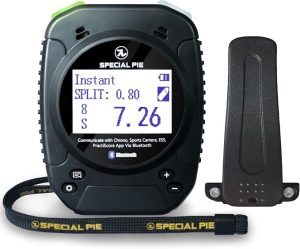
Crafted with ease of use in mind, the Indesign Shot Timer offers practical features for competitive shooters, range officers, and anyone who wants to track shooting performance more accurately.
As one of the best shot timers for training and dry fire practice, it supports Bluetooth connectivity with PractiScore and IPSC ESS. This makes it easier to integrate shot timing into competition workflows.
Beyond that, its advanced shot detection and echo-filtering technology help distinguish actual shots from background noise, reducing false readings and missed shots. Furthermore, the upgraded shortcut keys provide quick access to walkthrough mode, shot history, PAR mode, sensitivity, and volume settings without requiring you to navigate complicated menus.
You can also adjust the buzzer between high-frequency, low-frequency, and mute settings to suit different training environments. The timer stores up to 20 sets of shot histories, with as many as 99 shots per set, helping you review performance and monitor progress over time.
The Indesign Shot Timer also combines long battery life, clear visibility, and portable construction for demanding range sessions. Its rechargeable battery delivers up to 72 hours of continuous operation, while the adjustable ECO mode automatically shuts down the device after 1–60 minutes of inactivity to conserve power.
In addition to everything else, the timer has an impact-resistant, waterproof construction adds durability, while the compact, one-handed design allows you to operate it without unnecessary handling difficulties.
Pros
- Connects to PractiScore and IPSC ESS via Bluetooth
- Advanced shot detection with echo filtering
- Stores 20 shot-history sets of up to 99 shots each
- Quick-access shortcuts
- Adjustable buzzer settings
- Long battery life
Cons
-
Bluetooth features require compatible devices and software
6. Competition Electronics ProTimerBT Shot Timer
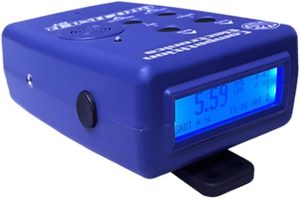
Next, the Competition Electronics ProTimerBT Shot Timer is an essential accessory for tracking shooting performance and improving your training sessions.
Its built-in Bluetooth connectivity pairs with a free mobile app for Apple, Android, and Kindle devices, allowing you to catalog shooting data and review your progress through an enhanced interface.
The timer also features a bright LED start indicator that provides a useful visual signal for shooters who have difficulty hearing the start beep. For quieter practice sessions, the headset jack lets you use headphones when the audible buzzer might disturb other shooters. These features make the ProTimerBT a versatile training tool for both indoor and outdoor shooting environments.
Moreover, the ProTimerBT includes a built-in shot string memory that stores up to 50 strings for on-screen review, helping you compare results and identify areas for improvement without immediately transferring your data to a phone.
Beyond that, it increased sensitivity can detect subtle sounds, including a finger snap, which supports dry-fire practice alongside live-fire training. Competitive shooters also benefit from the integrated hit factor scoring calculator, particularly when practicing for USPSA matches.
Pros
- Bluetooth connectivity with a free mobile app
- Stores up to 50 shot strings for later review
- Bright LED start indicator for visual feedback
- Headset jack supports quieter practice
- Wide range of sensitivity settings
- Built-in hit factor calculator for USPSA shooters
Cons
-
Requires a compatible mobile device to access app-based features
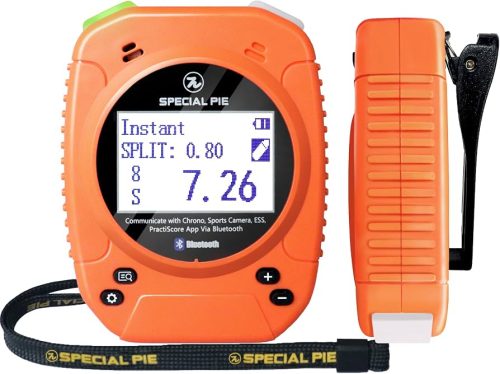
7) SPECIAL PIE Shot Timer
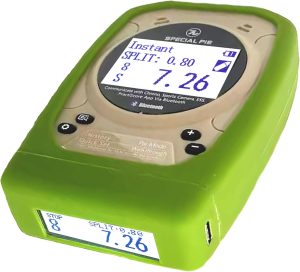
Coming in seventh is the SPECIAL PIE Shot Timer. This shot timer is versatile for competitive shooters, range officers, and firearm enthusiasts who want to measure their shooting performance and improve consistency during training.
Its reported use in major shooting competitions, including IPSC and IDPA events, highlights its focus on dependable performance under demanding conditions. The timer also supports Bluetooth connectivity with scoring applications such as PractiScore 2 and IPSC ESS, allowing users to integrate timing data into their competition workflows.
Another appealing feature is the dual-display design, which includes a specially designed vertical screen for quick, convenient viewing. Both displays feature automatic backlighting to improve readability in bright sunlight and low-light indoor ranges, helping shooters check their times without unnecessary delays.
The SPECIAL PIE Shot Timer also combines straightforward controls with practical features for extended training sessions. Its shortcut keys provide quick access to walkthrough countdowns and historical shot data, while the compact, one-handed design makes operation convenient during practice and competitions.
Above all, the built-in 1000mAh rechargeable battery delivers up to 72 hours of continuous use, reducing the need for frequent charging. Users can also customize the ECO mode to switch off the device after 1–60 minutes of inactivity, helping conserve battery power between drills.
Pros
- Bluetooth support for PractiScore 2 and IPSC ESS
- Dual displays with automatic backlighting
- Long battery life
- Convenient shortcut keys and one-handed operation
- Customizable ECO mode to conserve power
- Compact and easy to transport
Cons
- Bluetooth features depend on compatible apps and devices
8) Byerba Shot Timer
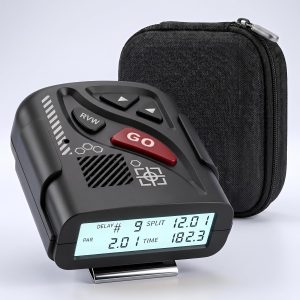
Suitable for both left-and-right handed shooters, the Byerba Shot Timer is our final recommendation for the best shot timers for training & dry fire practice.
Its 0.01-second precision helps you record first-shot times and split times, making it easier to evaluate consistency and identify areas that need improvement. The timer also features four specialized modes: INSTANT, DELAY, PAR timer, and history review.
The DELAY mode introduces a random start interval of 2–3.5 seconds, while the PAR timer helps you practice completing drills within a set time. These functions support different training routines and allow you to monitor progress without relying on guesswork.
Furthermore, the six-level adjustable buzzer lets you match the alert volume to your environment, whether you practice indoors or at an outdoor range where hearing protection may reduce the sound.
The Byerba Shot Timer also emphasizes convenience and ease of use. Its rotating belt clip locks at 15°, 30°, or 45°, allowing you to view the display comfortably without disrupting your stance, and its design accommodates both left- and right-handed users.
Beyond that, the recessed controls help prevent accidental button presses during movement, while the instant-read LCD provides quick access to shot history, first-shot times, and total shot strings. This timer also runs on a standard 9V battery, which comes included, and offers a claimed battery life of up to 100 days, depending on usage. This battery-powered design eliminates the need for charging cables and makes the unit convenient to carry in a range bag.
Pros
- 0.01-second timing precision
- Compact size
- Four training modes
- Six adjustable buzzer levels
- Ambidextrous design
- Clear LCD with shot history
Cons
- The Small LCD is less convenient to read at a glance
Key Factors to Consider when Choosing the Best Shot Timers for Training & Dry Fire Practice
Whether you train at a live-fire range or practice at home, the right timer can help you identify weaknesses and improve consistency. Consider these seven key factors before making a purchase:
Timer Accuracy and Sensitivity
Firstly, accuracy plays a major role when choosing the best shot timers for training & dry fire practice. A reliable timer should detect the starting signal and record shots consistently, allowing you to measure reaction times and splits without misleading results.
For live-fire training, look for a model with an adjustable microphone sensitivity that can detect your shots while reducing interference from nearby shooters.
For dry fire, choose a timer that supports electronic training systems or provides a suitable start signal and par-time function, since ordinary microphones may not register the sound of a trigger click reliably. Consistent measurements help you evaluate your performance and track improvements over time.
Dry Fire Compatibility
Not every shot timer works equally well for dry-fire practice, so check its capabilities before purchasing. Some models provide audible start signals, adjustable par times, and random delays that help you practice presentation, trigger control, and other unloaded firearm-handling exercises. However, a conventional shot timer may not detect dry-fire trigger clicks because they produce much quieter sounds than live ammunition.
If you want to record simulated shots, consider a timer that supports compatible dry-fire sensors, electronic targets, laser training cartridges, or dedicated training applications. Always verify that the timer supports your preferred training system before making a purchase.
Adjustable Start Delays and Par Times
Adjustable start delays and par times make a shot timer more versatile for different training routines. A start delay gives you time to prepare before the signal sounds, while a random delay prevents you from anticipating the start and encourages a more natural reaction.
Furthermore, par-time settings let you establish a fixed period for completing a drill, helping you assess speed and consistency. Look for a timer that allows you to customize these settings to suit your current skill level and training goals. These features prove especially useful during dry fire because they help structure practice sessions even when the timer cannot detect individual trigger presses.
Display and Ease of Use
Next, a clear display and straightforward controls make a shot timer easier to operate during training. Look for a screen that shows reaction times, split times, par-time settings, and recorded results in an easy-to-read format. Large buttons and an intuitive menu help you adjust settings quickly without interrupting your practice session. Backlit displays also improve visibility in dim indoor ranges or home training spaces. If you plan to use the timer frequently, choose a design that lets you access essential functions without navigating complicated menus.
Data Recording and Performance Tracking
The best shot timers for training & dry fire practice hace data-recording capabilities to help you monitor your progress across multiple training sessions. Some models store previous strings of fire, display split times, or connect to smartphone applications that organize your results. These features allow you to compare reaction times, identify inconsistent intervals, and determine whether your performance improves with practice.
Battery Life
Moreover, battery life affects how reliably a shot timer performs during regular use. Choose a model with sufficient battery capacity to handle extended sessions without frequent recharging or battery replacement. A rechargeable battery may offer convenience, while a replaceable battery can make it easier to resume training when power runs low.
Durability
Check the housing material, button quality, and resistance to dust or moisture, especially if you train outdoors. A durable timer with dependable weather protection withstands regular handling and provides long-term value.
Price and Overall Value
Finally, your budget should match the features you actually need from a shot timer. Basic models may provide start signals, reaction-time measurements, and simple par-time settings, while advanced options may include Bluetooth connectivity, detailed shot analysis, onboard storage, and specialized dry-fire compatibility. Before paying extra for advanced features, determine whether they support your training routine or simply add functions you may rarely use.
Read Next:
- Best Flip Up Iron Sights
- Best Hiking Poles for Kids
- Best Quick Release Crossbow Slings
- Best 100ft Garden Hoses
Best Shot Timers for Training & Dry Fire Training FAQs
- What Is a Shot Timer Used for in Training?
A shot timer measures reaction times, shot intervals, and overall drill times during shooting practice. It helps you evaluate speed, track consistency, and identify areas that need improvement. During dry-fire practice, a shot timer provides start signals and par times to structure exercises and measure completion time.
- What Is a Par Timer on a Shot Timer?
A par timer lets you set a specific amount of time to complete a drill. The timer signals the start and indicates when the preset period ends. This feature helps you establish consistent practice routines and assess your performance against a fixed time limit.
- What Features Should Beginners Look for in a Shot Timer?
Beginners should prioritize simple controls, a clear display, reliable shot detection, adjustable start delays, and par-time settings. Good battery life and straightforward operation also make regular practice easier. If you intend to train primarily at home, confirm that the timer supports your preferred dry-fire method.
- Do Shot Timers Work With Smartphone Apps?
Yes. Most digital shot timers connect to smartphone apps through Bluetooth, allowing you to review training records, analyze split times, and track progress. Some models operate independently without requiring a phone. Check the manufacturer’s compatibility requirements and app features before purchasing.
Final Words
In conclusion, choosing the best shot timers for training & dry fire practice requires careful consideration of its features, accuracy, and ease of use. A reliable shot timer helps you track reaction times, measure shot intervals, set par times, and monitor your progress during structured practice session. Look at the features each timer is equipped with and choose a model that will help you monitor your progress, identify weaknesses, and make better use of every training session.