
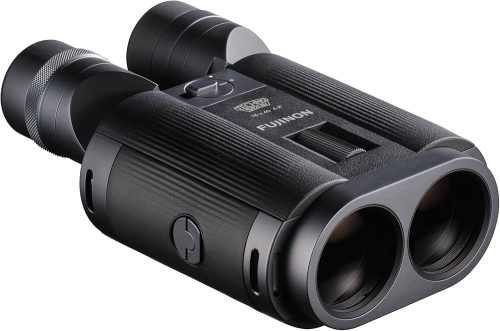
If you are tired of using high-power binoculars and struggling to keep the image steady, it’s time to get yourself a pair of the best image stabilized binoculars. These binoculars use built-in technology to counteract hand shake and movement, giving you a clear, stable view even at high magnifications.
In this guide, we’ll walk through the top image-stabilized binoculars on the market, explain the key features to look for, and help you choose the right pair based on your needs and budget. Whether you’re a casual nature enthusiast or a serious outdoor observer, we will make your buying decision easier.
How Image Stabilization in Binoculars Works
Image stabilization in binoculars reduces image shake caused by hand movement. This makes it easier to observe distant objects clearly, especially at high magnification.
Most modern binoculars use electronic image stabilization, where internal sensors detect motion and microprocessors adjust the view in real time. Another option is optical or mechanical stabilization, which uses moving internal lenses or prisms to counteract movement physically.
Why Image Stabilization Matters
Standard binoculars shake easily at higher magnifications, affecting image clarity. On the other hand, image stabilization helps keep the view steady. It also matters in the following ways:
- Improves viewing clarity. Firstly, image stabilization helps produce sharper, more focused images of distant objects like birds, ships, or stadium action.
- Enhances comfort during long observation. There is less eye strain since the image remains stable.
- Supports handheld use. Furthermore, these binoculars reduce the need to carry a tripod when observing for extended periods.
- Better performance in motion environments. The best image stabilized binoculars are useful when watching moving targets such as wildlife or sports.
- Helps beginners and users with shaky hands. This makes observation easier for people who struggle to keep binoculars steady.
- Improved low-light performance. Additionally, image stabilized binoculars support better image clarity in low-light conditions, where stability is especially helpful.
- Smooth operation. Last but not least, these binoculars provide smoother observation for longer periods compared to non-stabilized binoculars.
Best Image Stabilized Binoculars
1) Canon 10×42 L is WP Image Stabilized Binoculars – Best Overall
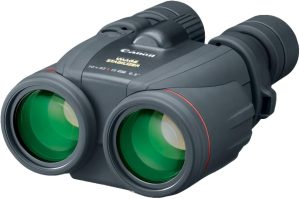
The Canon 10×42 L IS WP Image Stabilized Binoculars are the best image stabilized binoculars. They are a premium optical tool built for serious outdoor enthusiasts and professionals who demand steady, high-quality viewing.
Featuring 10x magnification and large 42 mm objective lenses, these binoculars provide bright, detailed images even in challenging lighting conditions.Furthermore, the image stabilization system minimizes hand shake and allows users to observe distant subjects with impressive clarity without a tripod.
Combined with Canon’s L-series optics, the binoculars produce sharp images, excellent contrast, and natural color reproduction across the viewing field. This makes them ideal for birdwatching, wildlife observation, marine navigation, and sporting events.
Moreover, these binoculars are designed for durability and comfort. They come with a waterproof construction that protects them from rain and harsh outdoor environments. The solid body also features an ergonomic grip that makes it comfortable to hold for extended periods, while the intuitive controls allow users to easily activate the stabilization system and adjust focus quickly.
Above all, the long eye relief and adjustable eyecups enhance comfort for both eyeglass and non-eyeglass wearers.
Pros
- Reliable image stabilization
- Impressive image sharpness and color accuracy
- Waterproof design suitable for outdoor and marine environments
- Comfortable grip and ergonomic design
- Wide field of view
Cons
- Heavier than many conventional binoculars
- Sits at a higher price compared to standard binoculars
2) SIG SAUER Zulu6 FDE HDX OIS 16X42mm – Best for Bird Watching
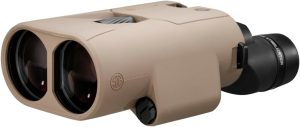
The SIG SAUER Zulu6 FDE HDX OIS 16x42mm binoculars combine high magnification with advanced stabilization technology, making them a powerful choice for birding.
With 16x magnification and 42mm objective lenses, these binoculars deliver bright, detailed images even when viewing distant subjects.
The integrated Optical Image Stabilization (OIS) system helps eliminate hand shake, allowing users to maintain a steady view without needing a tripod. This is especially valuable at higher magnifications, where even small movements can disrupt clarity.
Optically, the HDX glass system enhances color fidelity, contrast, and sharpness, producing crisp visuals across the field of view.
Furthermore, the binocular is designed with both performance and comfort in mind. It features an ergonomic chassis that fits comfortably in the hands during extended observation sessions.
To top it all off, these binoculars are built with a robust, weather-resistant housing that helps protect the internal components from dust and moisture, making them dependable in challenging outdoor conditions.
Pros
- Advanced Optical Image Stabilization reduces handshake
- Powerful 16x magnification for long-distance viewing
- HDX glass provides sharp images and excellent color accuracy
- Durable, weather-resistant construction
- Comfortable ergonomic design for extended use
Cons
- Higher price compared to standard binoculars
- Requires batteries for the stabilization system
3. Fujinon Techno-Stabi TS-X 14×40 Image Stabilization Binocular – Best for Wildlife Observation
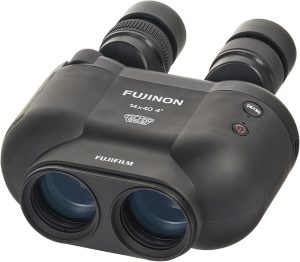
When it comes to wildlife observation, the Fujinon Techno-Stabi TS-X 14×40 Image Stabilization Binoculars are a perfect companion.
They feature 14x magnification and 40mm objective lenses that deliver bright, sharp images even when observing distant subjects.
To complement its high zoom power, the advanced electronic image stabilization system helps reduce handshake. This makes it ideal for activities such as birdwatching, marine navigation, and long-distance wildlife scanning.
Furthermore, the stabilization function is activated with a button press, instantly correcting vibrations and allowing users to maintain a clear, steady view without a tripod.
Regarding optical performance, the binocular features high-quality optics and rugged construction. The fully multi-coated lenses enhance light transmission and contrast, while the durable housing protects against tough outdoor conditions.
Above all, the ergonomic design ensures comfortable handling during extended viewing sessions, and the long eye relief makes it suitable for users who wear glasses.
Pros
- Powerful 14x magnification
- Bright and sharp images
- Durable construction suitable for outdoor and marine use
- Comfortable ergonomic design
- Long eyeglass-friendly eye relief
- Quick stabilization activation with a simple button press
Cons
- Heavier than standard non-stabilized binoculars
4) Nikon STABILIZED 12×25 Binoculars – Best Compact
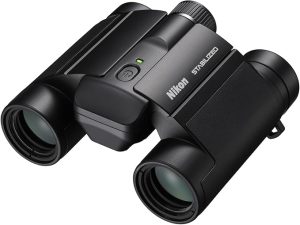
As one of the best image stabilized binoculars, the Nikon Stabilized 12×25 Binoculars are designed for users who want powerful magnification in a compact, travel-friendly package.
With 12x magnification and 25mm objective lenses, these binoculars provide impressive reach while remaining lightweight enough for extended handheld use.
Moreover, the image stabilization technology reduces hand shake and vibration, making it easier to track distant subjects such as birds, wildlife, sporting events, or stage performances without a tripod.
To complement the image stabilization, its optics deliver sharp, bright images with good color accuracy, and the multi-coated lenses maximize light transmission for clearer viewing in a variety of lighting conditions.
What’s more, the binoculars are built with a durable body to withstand abuse and rough handling. The ergonomic design and well-placed controls make it easy to activate the stabilization feature while viewing.
These binoculars also have a foldable design that makes them highly portable, fitting easily into a small bag or jacket pocket.
Pros
- Compact and lightweight design for easy portability
- 12x magnification provides strong zoom capability
- Multi-coated lenses enhance brightness and clarity
- Comfortable ergonomic design for extended viewing
- Ideal for travel, concerts, sports, and wildlife observation
Cons
- Smaller 25mm objective lenses limit low-light performance
5) Kite Optics APC Stabilized 16×42 Binoculars – Best for Marine Use
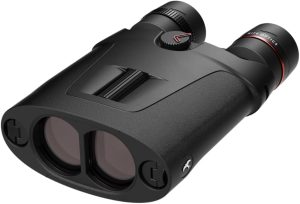
The Kite Optics APC Stabilized 16×42 Binoculars are designed for users who demand high magnification without sacrificing image stability.
With a powerful 16x magnification and 42mm objective lenses, these binoculars deliver bright, detailed views that are ideal for marine use, boating, and long-distance viewing.
The built-in electronic image stabilization system effectively reduces handshake, allowing users to enjoy a steady image even at higher magnifications where movement is usually more noticeable.
In addition to their stabilization technology, the APC 16×42 binoculars feature high-quality optics that produce sharp images with excellent contrast and color accuracy.
Furthermore, the Automatic Power Control (APC) system helps conserve battery life by turning off stabilization when the binoculars are not in use, making them practical for long field trips.
These binoculars are also built with a durable, weather-resistant housing to handle outdoor conditions while remaining comfortable to hold.
Pros
- Powerful 16x magnification for long-distance observation
- Advanced image stabilization
- 42mm objective lenses provide bright and clear images
- Automatic Power Control helps extend battery life
- Durable, weather-resistant construction for outdoor use
- Sharp optics with good contrast and color accuracy
- Comfortable ergonomic design for extended viewing
Cons
- Higher price compared to standard binoculars
6. Canon 10×30 Image Stabilization II Binoculars – Best Budget
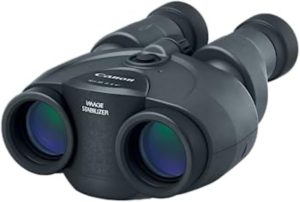
Last but not least, we have the Canon 10×30 Image Stabilization II Binoculars.
With 10x magnification and 30mm objective lenses, these binoculars provide bright, sharp images that work well for birdwatching, wildlife observation, sporting events, and travel.
As one of the best image stabilized binoculars for budget buyers, they employ an optical image stabilization technology that reduces hand shake at the push of a button. This stabilization allows users to maintain a clear, stable view even at higher magnifications where normal binoculars would appear shaky.
Furthermore, the optics deliver impressive clarity and contrast, making distant subjects easier to observe in detail. The multi-coated lenses help enhance brightness and color accuracy in various lighting conditions, while the wide field of view is essential for easy target acquisition.
In addition to performance, these binoculars are built with user comfort in mind. The ergonomic design makes them comfortable to hold for extended periods, and the lightweight construction makes them easier to carry compared to larger stabilized models
Pros
- Excellent image stabilization reduces hand shake significantly
- Sharp and clear optics with good color accuracy
- Lightweight and compact compared to many stabilized binoculars
- Comfortable ergonomic design for extended use
- Wide field of view for tracking moving subjects
- Easy-to-use focus wheel and stabilization button
Cons
- Requires batteries for the image stabilization feature
- More expensive than standard non-stabilized binoculars
Next Read:
Key Factors to Consider when Choosing the Best Image Stabilized Binoculars
When buying image stabilized binoculars, take into consideration these key factors:
Stabilization Technology
Firstly, the quality of the stabilization system is one of the most important factors to consider when choosing image-stabilized binoculars. A good system should effectively reduce hand shake and maintain a steady, clear view when observing distant subjects or when moving slightly. Look for models that offer reliable vibration compensation so you can enjoy sharp images even at higher magnifications.
Magnification and Objective Lens Size
Magnification power determines how close objects appear, while the objective lens size affects how much light enters the binoculars. Popular configurations such as 10×42 or 12×50 provide a good balance between viewing power and brightness. Higher magnification offers more detail but usually requires stronger stabilization to maintain a steady image.
Image Brightness and Clarity
Next, optical quality plays a major role in delivering sharp and bright images. Lenses with high-quality coatings help reduce glare, improve contrast, and enhance color accuracy, especially in low-light conditions. If you plan to observe during dawn, dusk, or cloudy weather, prioritize binoculars with excellent light transmission.
Battery Life and Power Efficiency
Since image stabilization systems rely on power, battery performance is very important. The best image stabilized binoculars should operate for long periods without frequent battery replacement or recharging. Energy-efficient designs are also important and convenient for outdoor activities and travel.
Weight and Portability
The best image stabilized binoculars usually weigh more than standard models because of the internal electronic components. Lightweight construction improves comfort during extended use, such as bird watching, hiking, or sporting events. Always check the product weight if you plan to carry the binoculars for long periods.
Durability and Weather Resistance
Moreover, outdoor use requires binoculars that tolerate dust, moisture, and accidental knocks. Waterproof and fog-resistant features are highly recommended if you will use the binoculars in unpredictable weather. A strong and durable build helps extend product lifespan.
Budget and Overall Value
Lastly, consider budget and overall value. Price should match the quality of optics, stabilization performance, and durability. Premium models often provide superior clarity and advanced features, but mid-range options can also deliver excellent performance for casual users. Compare specifications, customer feedback, and warranty coverage to get the best value.
Tips for Using Image Stabilized Binoculars
Using image stabilized binoculars correctly improves your viewing experience, no matter your outdoor excursion. Follow these glassing tips to get the most out of them while ensuring comfort, clarity, and longer equipment life.
- Activate Stabilization Only When Needed. Most image stabilized binoculars include a button that activates the stabilization system. Turn this feature on when you need a steady view of distant or moving subjects, such as birds or wildlife. Turning it off when not needed helps conserve battery life and prevents unnecessary power consumption.
- Hold the Binoculars Properly. Even though stabilization reduces shake, proper hand positioning still matters. Hold the binoculars with both hands and keep your elbows close to your body for extra support. This posture helps the stabilization system work more efficiently and gives you a more stable viewing experience.
- Adjust the Eyecups and Diopter. Before using the binoculars for extended viewing, adjust the eyecups and diopter settings to match your eyesight. Proper adjustments ensure that both eyes focus clearly and reduce eye strain.
- Start With the Stabilization Off. When first locating a subject, keep the stabilization turned off. Once the object is centered in your field of view, activate the stabilization feature to lock in a clearer and steadier image.
- Use Them in Suitable Lighting Conditions. The best image stabilized binoculars perform optimally in good lighting conditions. Although many models handle moderate low-light situations, using them during daylight or early evening will provide the clearest images and best color accuracy.
- Carry Spare Batteries. Since stabilization systems rely on batteries, it’s wise to carry spare batteries when going on long outdoor trips. This ensures the stabilization feature remains available whenever you need it.
- Take Short Viewing Breaks. Extended viewing through binoculars causes eye fatigue. Taking short breaks allows your eyes to rest and helps maintain better focus when you resume observing.
Pros & Cons of Stabilized Binoculars
Pros:
- Reduce image shake: Built-in stabilization technology minimizes hand movement, helping you see distant subjects more clearly.
- Improve viewing comfort: Users observe for longer periods without feeling eye fatigue caused by unstable images.
- Better high-magnification performance: Stabilization helps maintain sharpness when using powerful zoom levels.
- Versatile outdoor use: The best image stabilized binoculars are versatile for bird watching, hiking, travel, and watching sports or wildlife in motion.
- Stable viewing in movement: Furthermore, these binoculars are highly helpful when observing from vehicles, boats, or windy environments.
- Enhanced low-light clarity: Many models help maintain image steadiness when the lighting is weak.
- Less strain on the eyes: A steady image makes focusing easier compared to shaking handheld optics.
Cons:
- Higher cost: These binoculars are usually more expensive because of advanced technology and electronics.
- Extra weight: Stabilization components and batteries add some weight compared to standard models.
- Dependence on power: Most require batteries or charging, and the stabilization feature stops working when power is low.
- Maintenance considerations: Electronic stabilization systems require careful handling to avoid damage from drops, moisture, or dust.
Best Image Stabilized Binoculars Care and Maintenance Tips
Follow these care and maintenance tips to keep your image stabilized binoculars in top condition always:
- Clean lenses properly: Use a soft microfiber cloth or lens cleaning brush to remove dust and fingerprints. Avoid rough materials that may scratch the optical surface.
- Store in a protective case: Keep the binoculars in a padded, dry case when not in use to protect internal stabilization components and lenses from impact or moisture.
- Avoid extreme weather exposure: Although many models are weather-resistant, prolonged exposure to rain, heat, or humidity can affect electronic and optical performance.
- Handle gently: Image-stabilized binoculars contain sensitive electronic parts, so avoid dropping or applying excessive pressure.
- Monitor battery condition: Remove batteries if the binoculars will not be used for a long time to prevent leakage or corrosion inside the battery compartment.
- Keep lenses covered: Use lens caps when carrying or storing binoculars to reduce dust accumulation and accidental scratches.
- Check stabilization function regularly: Turn on the stabilization system occasionally to ensure it is working properly and maintain internal mechanism readiness.
- Service when necessary: If image stability or clarity decreases, consider professional inspection rather than attempting internal repairs.
FAQs
- Are image-stabilized binoculars good for beginners?
Yes. They are easy to use and help beginners get sharper images without needing a tripod or advanced handling skills.
- Do image-stabilized binoculars need batteries?
Yes. Most models require batteries or charging because the stabilization system depends on power to function.
- What magnification is best for image-stabilized binoculars?
Magnifications between 8x and 16x are generally recommended because they offer good detail without excessive image shake.
- Are image-stabilized binoculars suitable for low-light viewing?
Absolutely, especially if they have good lens coatings and large objective lenses, which help improve brightness and contrast.
Parting Shots
Hopefully, you have found this buying guide comprehensive and of great help. There are many great image stabilized binoculars available for birding, boating, wildlife observation, travel, or sports events. Take time to compare the features each model is built with and choose a pair that blends best with your needs while providing clear and enjoyable views.